
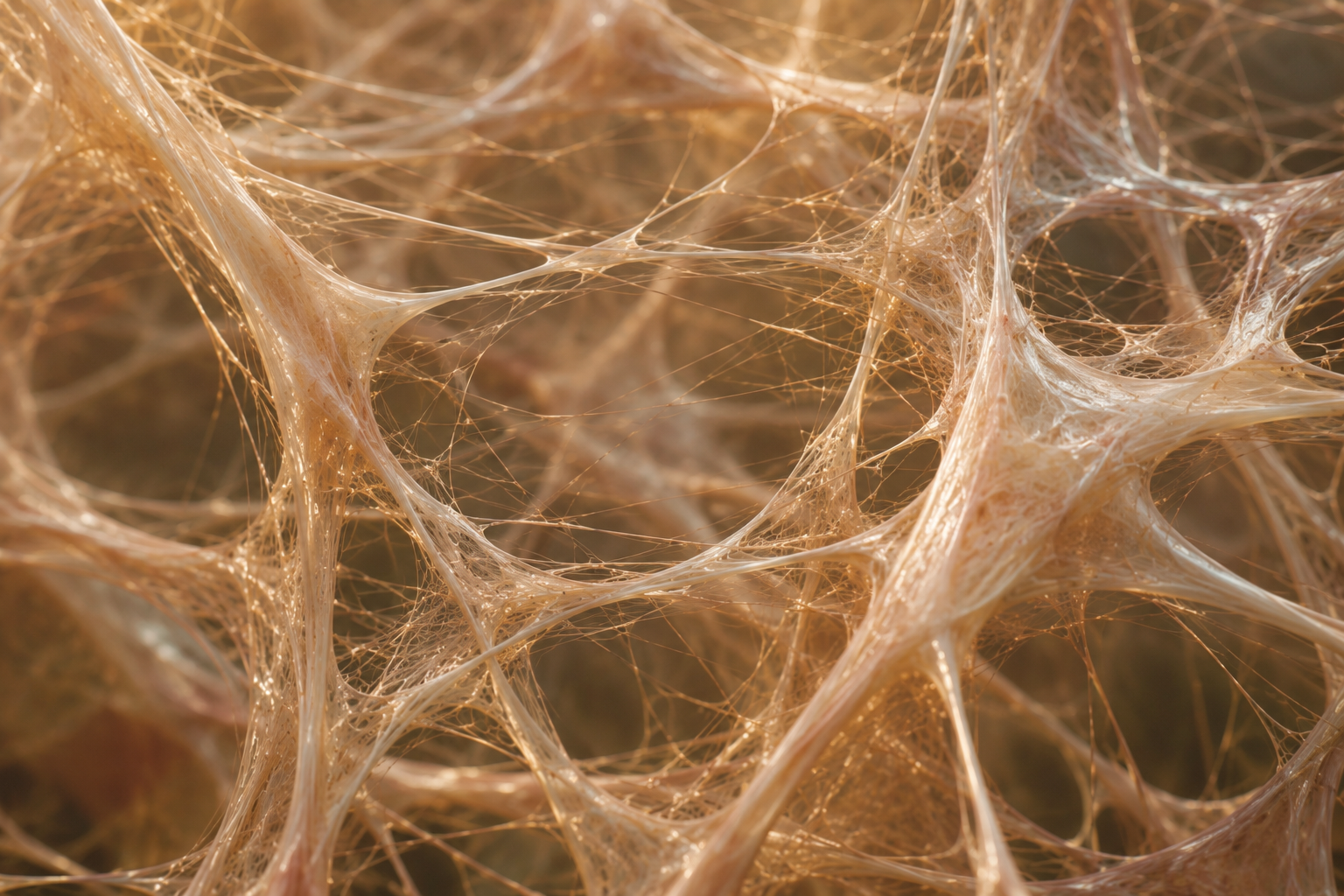
Fascia
Fascia: The Body’s Living Web
Fascia is a continuous web of connective tissue that wraps and supports everything in your body. Muscles, bones, organs, vessels, nerves. Everything.
Think of the white, web-like membrane that you see when you peel an orange. That thin layer of web-like material connects each wedge of the orange, and surrounds each juice droplet, connecting the whole orange. Your body has something similar connecting the top of your head to the soles of your feet, and everywhere in between.
In a healthy system, fascia does way more than hold things together in place. It allows for movement at every scale, from microscopic shifts inside your cells to the large sweep of your arms overhead. It helps heal wounds. In some traditions, like acupuncture, have considered it a pathway for the body’s subtler energetic currents. It cushions your organs, anchors muscle to bone, and quietly supports the pathways your blood and fluids travel through.
When fascia tightens, it can restrict blood and lymphatic flow, put pressure on nerves, limit your body’s range of motion, and sometimes create pain patterns.
People experiencing neck pain, headaches, TMJ tension, or a persistent feeling of tightness often discover that fascial restrictions may be contributing to their symptoms.

Why Fascia Tightens
Fascia is meant to glide and stretch. But repetitive strain changes it. When a movement pattern or stress response play out again and again, the body responds by laying down denser fibers within the fascia. It essentially reinforces the area to take some of the load off the muscle.
Some other common contributors include:
physical injury or surgery
repetitive movement or poor posture
emotional stress held in the body
inflammation
extended stillness — sitting too long, desk work, recovering from illness
Because fascia is one continuous system, restriction rarely stays where it started. A pattern in your ankle can echo into your hip. A scar from years ago can still be shaping how your shoulders move today.
Fascial patterns can develop over years. For that reason, meaningful change sometimes happens gradually rather than all at once.
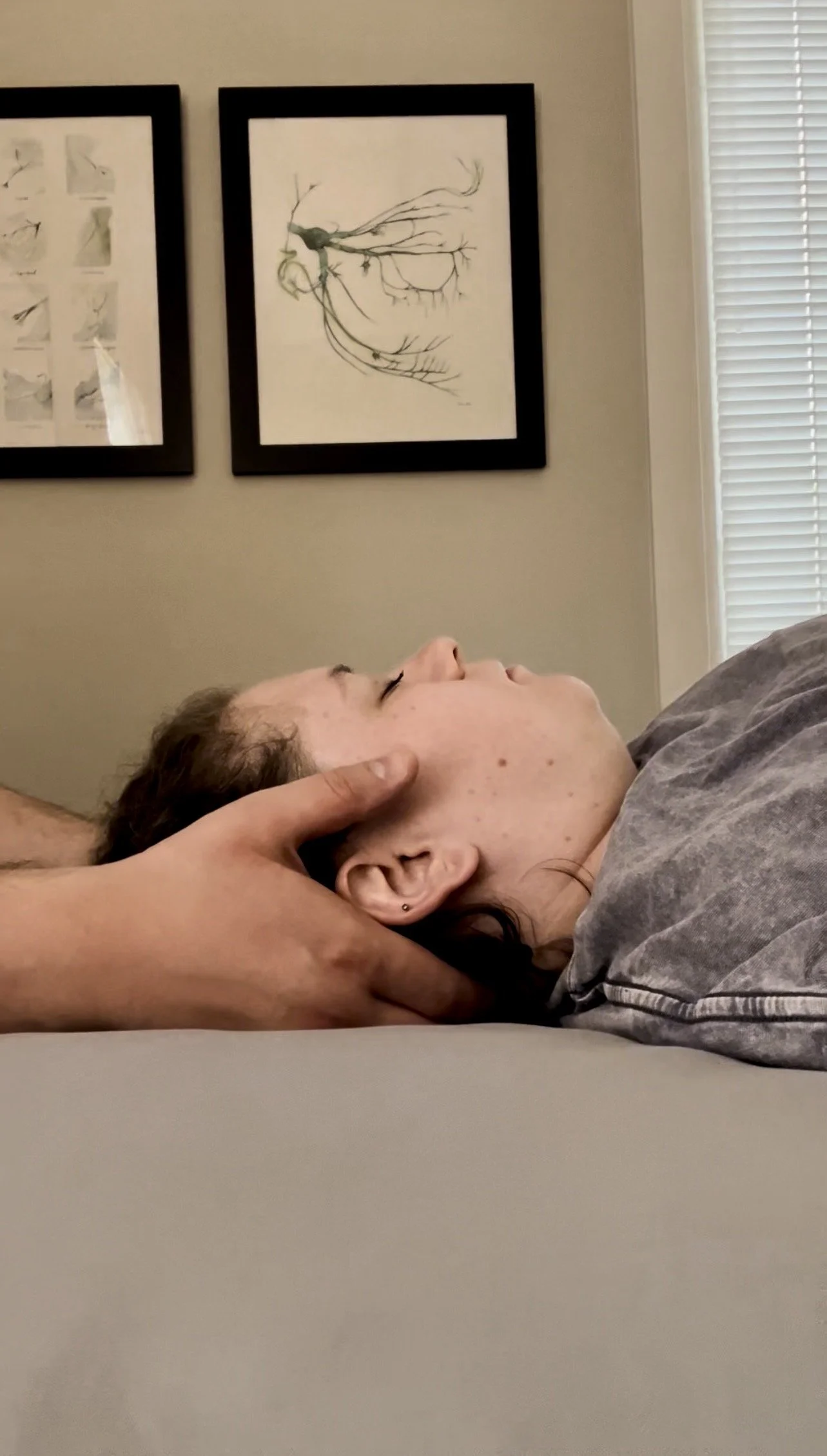
Where CranioSacral Therapy Comes In
Fascia responds well to gentle, deliberate work. In structural or myofascial approaches, the therapist introduces mechanical force to help release the tension patterns. CranioSacral Therapy takes a different path. Rather than working with the tissues directly, it supports the body’s own impulse toward balance. The release in the fascia tends to happen on its own, as a byproduct of that support rather than a goal of it.
At the deepest layer of this fascial network is the dura mater, the tough membrane that covers your brain and spinal cord. Inside it, cerebrospinal fluid circulates in a slow, steady rhythm which cushions and nourishes your central nervous system with every cycle. This subtle rhythm is what the CranioSacral practitioner is trained to feel for throughout the body, using it almost like a compass to sense where things are flowing freely and where they aren’t.
Where that rhythm feels muted or uneven, I don’t push against it. I simply place my hands there and wait, offering just enough support for your system to find its own way back toward ease. Because the central nervous system has such a far reach, easing pressure on it here can ripple outward, settling not just fascia, but the whole interconnected system it touches.
This lighter approach matters. Your nervous system tends to soften more readily under gentleness than under pressure, especially in places that have been guarding tension for a long time.